
Hip Pain Treatment Sydney CBD
Hip pain in active people usually comes down to how load is shared between the hip joint, the gluteal muscles and the lower back. We assess hip mobility and strength, treat the tight and overworked tissue, and build the gluteal control that takes pressure off the joint.
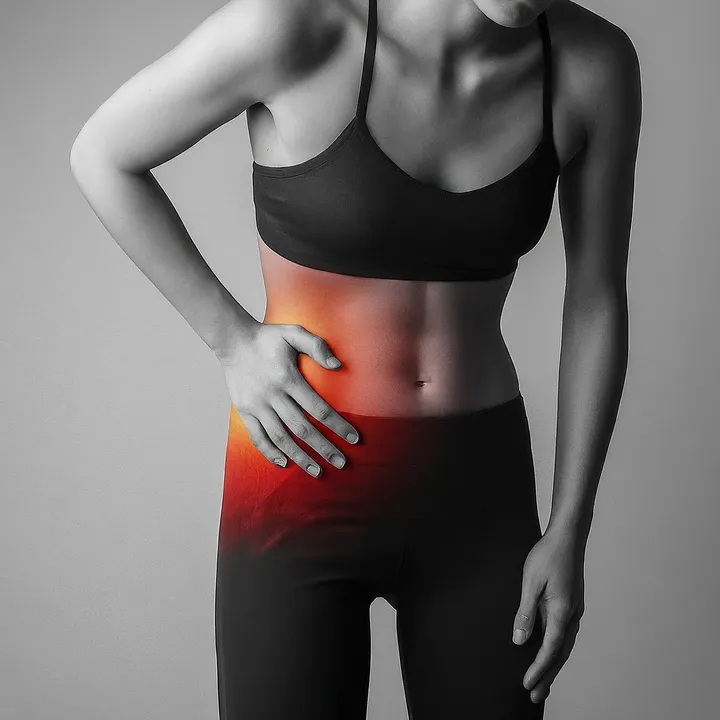
How we treat hip pain
Assessment covers hip range of motion, gluteal strength, single-leg control and the lower back, since pain in the hip and buttock is often referred. Treatment uses remedial massage and myofascial release through the hip flexors, glutes, TFL and adductors, dry needling of gluteal trigger points, and red light therapy over irritable bursae or joints.
Exercise therapy then rebuilds gluteal strength and single-leg stability, which is what protects the hip during walking, running and stairs. Runners and lifters get programs that fit around their training week.
Hip conditions: symptoms and causes
| Condition | Common symptoms | Common causes |
|---|---|---|
| Hip osteoarthritis | Hip pain, stiffness, limited range of motion, pain that worsens with weight bearing, difficulty walking or climbing stairs. | Degenerative changes in the hip joint cartilage, ageing, previous hip injuries, obesity, genetics, abnormal hip anatomy. |
| Hip bursitis | Pain on the outer hip or buttock that worsens with prolonged walking or stairs, tenderness, swelling. | Inflammation of the bursae around the hip from overuse, prolonged pressure on the hip, injury or arthritis. |
| Hip labral tear | Hip or groin pain, clicking or locking in the joint, stiffness, decreased range of motion, instability. | Trauma, repetitive twisting, structural abnormalities of the hip joint, degenerative change, hip impingement. |
| Hip flexor strain | Pain in the front of the hip or groin that worsens with hip flexion or stretching, weakness, difficulty walking or climbing stairs. | Overstretching or tearing of the hip flexor muscles from sudden movements, repetitive hip flexion such as running or kicking, inadequate warm-up. |
| Hip impingement (femoroacetabular impingement) | Hip or groin pain, especially with hip flexion or rotation, stiffness, decreased range of motion, clicking or catching. | Structural abnormalities of the femoral head or acetabulum, repetitive movements that cause impingement, sports with repetitive hip motion. |
Treatments we use for hip pain
Hip pain FAQs
Is hip pain from sitting all day common?
Yes. Long sitting shortens the hip flexors and switches off the glutes, which can produce pain at the front of the hip and lower back. Releasing the hip flexors and strengthening the glutes is usually effective.
Can you treat hip osteoarthritis?
We cannot reverse joint changes, but manual therapy for the surrounding muscles, red light therapy for joint comfort and a graded strength program can reduce pain and improve how far you can walk. Your GP or specialist stays involved for the joint itself.
Get hip pain assessed in Sydney CBD
Book an initial appointment online in under a minute. New clients choose "Consultation and Initial Treatment".